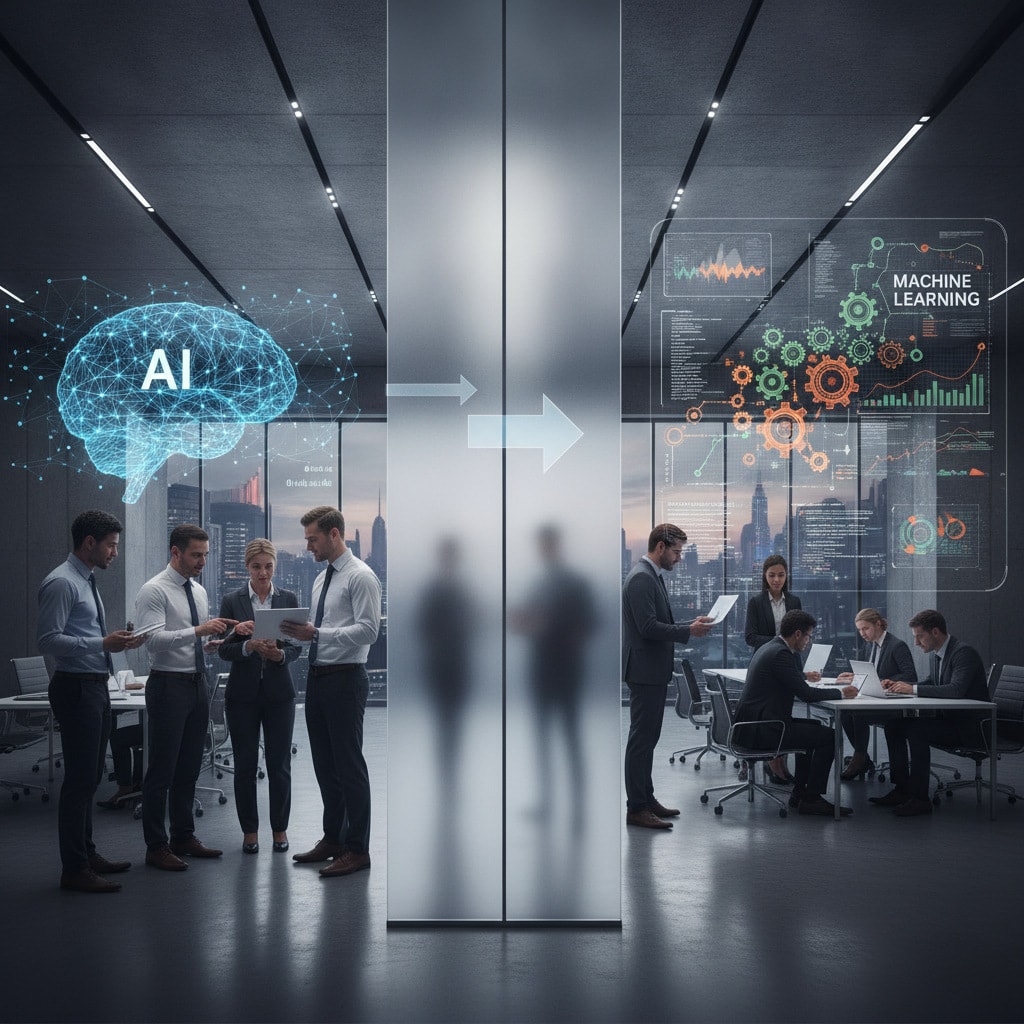
Introduction to AI vs. Machine Learning: Understanding the Differences for Business Strategy
For executives navigating the modern digital landscape, the terminology surrounding advanced computing often feels interchangeable. However, grasping the precise ai vs machine learning differences is essential for effective resource allocation. At Technologies, we view these concepts not as synonyms, but as distinct tiers of technological capability that drive our custom enterprise solutions.
Key Takeaways
- Machine Learning: Understanding the Differences for Business Strategy Introduction to AI vs.
- However, grasping the precise ai vs machine learning differences is essential for effective resource allocation.
- At Technologies, we view these concepts not as synonyms, but as distinct tiers of technological capability that drive our custom enterprise solutions.
- Artificial Intelligence represents the broad umbrella of computer systems designed to simulate human intelligence.
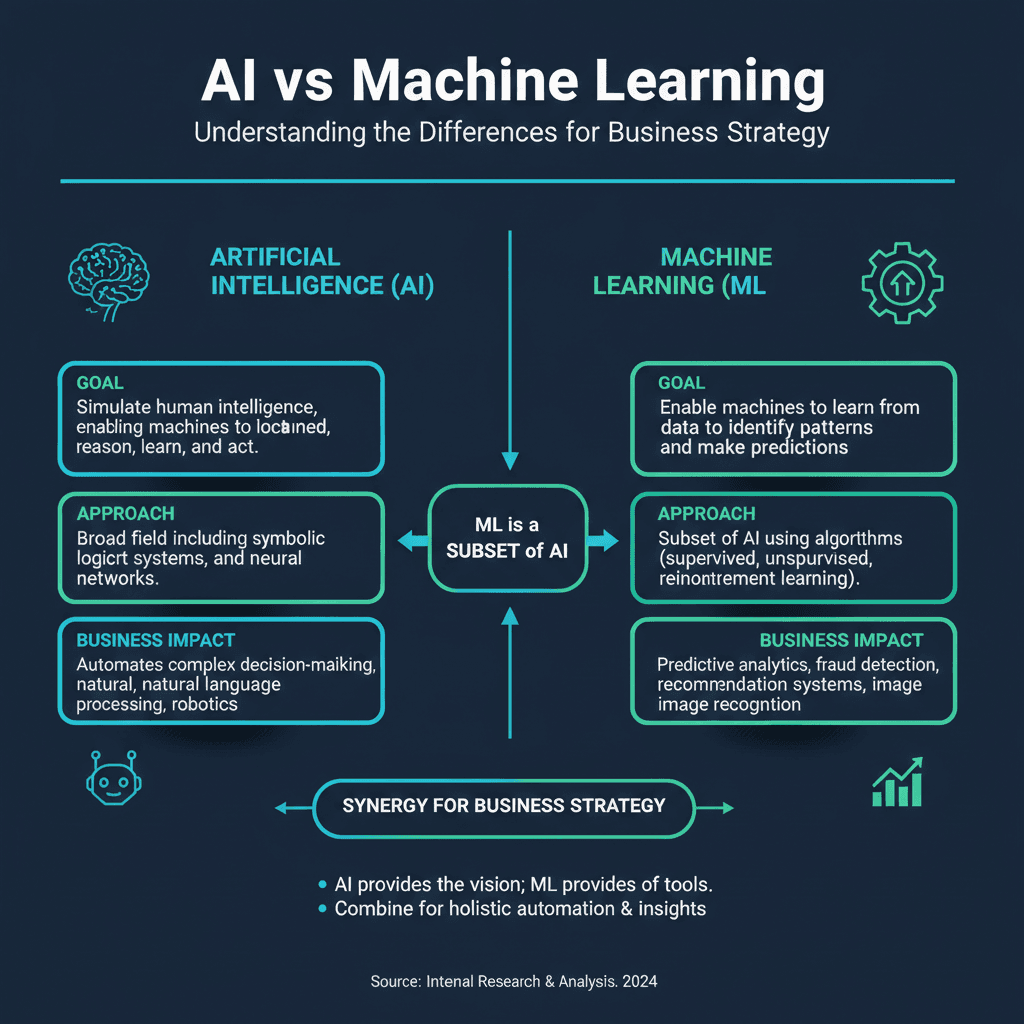
Artificial Intelligence represents the broad umbrella of computer systems designed to simulate human intelligence. It encompasses any technique that enables computers to mimic human behavior, from simple rule-based logic to complex decision-making frameworks. In contrast, machine learning is a specific subset of AI. It focuses on the development of algorithms that allow computers to learn from data patterns without being explicitly programmed for every specific task.
Core Distinctions in Enterprise Application
Understanding these nuances allows businesses to choose the right tools for their specific operational challenges. While AI provides the overarching goal of intelligent automation, machine learning provides the statistical engine that makes that automation adaptive and scalable.
| Feature | Artificial Intelligence | Machine Learning | |||
|---|---|---|---|---|---|
| Scope | Broad (Human-like intelligence) | Narrow (Data-driven patterns) | Function | Decision-making and reasoning | Predictive modeling and analysis |
| Goal | Simulate human cognition | Improve accuracy through data |
When our team at Technologies engages in Understanding Discovery Workshops, we often find that clients confuse these two domains. If your objective is to build a chatbot that follows a strict decision tree, you are utilizing basic AI. If your goal is to build a predictive engine that forecasts supply chain disruptions based on historical logistics data, you are implementing machine learning.
As a software development and IT consultancy firm, we specialize in AI/ML product development that bridges the gap between theoretical concepts and practical business outcomes. By identifying whether a project requires general intelligent systems or specialized statistical learning, we ensure that your investment in custom software development yields measurable returns. Distinguishing between these fields is the first step toward building a robust, future-proof technical architecture that supports your long-term growth objectives.
Understanding the Technical Hierarchy
To build a robust business strategy, you must explain ai vs machine learning differences clearly to stakeholders. While often used interchangeably, the technical distinction between artificial intelligence and machine learning is significant. Think of AI as the broad umbrella, the overarching science of creating systems capable of simulating human intelligence. Machine learning, conversely, is a specific subset of AI focused on the statistical techniques that allow computers to improve their performance on tasks through data exposure.
Defining the Technical Hierarchy
At Technologies, we view these concepts through the lens of practical application. AI encompasses the entire vision of building smart machines, while machine learning provides the engine. When our team engages in Understanding Discovery Workshops, we clarify that machine learning is the methodology used to train models to recognize patterns without explicit programming for every scenario.
The following table outlines how these concepts diverge in a professional software development environment:
| Feature | Artificial Intelligence | Machine Learning | |||
|---|---|---|---|---|---|
| Scope | Broad: Simulates human intelligence. | Narrow: Statistical learning from data. | Objective | Create systems that act like humans. | Improve accuracy through experience. |
| Input | Logic, rules, and data. | Historical datasets and algorithms. |
Why This Distinction Matters for Customers
For customers evaluating technology services, understanding this hierarchy prevents costly misalignments. If your business goal is to automate complex decision-making, you are likely looking for AI-driven orchestration. If your goal is to refine predictive analytics or optimize search performance, as discussed in our guide on Ais Impact On Seo 2026 Future Proofing Your Search Strategy, you are specifically seeking machine learning implementation.
Technologies specializes in custom enterprise solutions that bridge this gap. By identifying whether a project requires general AI logic or specific machine learning models, we ensure that your investment in AI/ML product development yields measurable results. We focus on the granular application of these tools to solve unique operational challenges rather than applying generic software templates. This precision allows our clients to scale their digital infrastructure effectively while maintaining a clear vision of their technical roadmap.
Exploring the Technical Scope
Article title: AI vs. Machine Learning: Understanding the Differences for Business Strategy.
To explain ai vs machine learning differences clearly for customers, we must distinguish between the broad vision of artificial intelligence and the specific statistical mechanics of machine learning. At Technologies, we view AI as the overarching umbrella of computer systems designed to simulate human intelligence. This includes reasoning, problem-solving, and perception. Machine learning, by contrast, is a specific subset of AI focused on the development of algorithms that allow computers to learn from data patterns without being explicitly programmed for every outcome.
Defining the Technical Scope
When clients approach us for AI/ML product development, they often conflate these terms. Understanding the distinction is vital for effective resource allocation. AI represents the goal, creating a system that acts intelligently. Machine learning is the engine that powers that goal by processing vast datasets to improve performance over time.
| Feature | Artificial Intelligence | Machine Learning |
|---|---|---|
| Scope | Broad: Systems mimicking human cognition. | Narrow: Statistical models learning from data. |
| Objective | Simulate intelligent behavior. | Improve accuracy through data exposure. |
| Application | Autonomous decision-making systems. | Predictive analytics and pattern recognition. |
For businesses, this distinction dictates the roadmap for custom software development. If your objective is to automate complex workflows or enhance search visibility, you might look toward Ais Impact On Seo 2026 Future Proofing Your Search Strategy. However, if you need to extract actionable insights from historical sales data, you are specifically deploying machine learning models.
Practical Application in Enterprise
As a software development and IT consultancy firm, we help organizations navigate these definitions to build robust infrastructure. We often start by Understanding Discovery Workshops to determine if a project requires a full-scale AI architecture or a targeted machine learning implementation. By clarifying these technical boundaries, we ensure that our technology services align with your specific operational requirements. Whether you are building a predictive maintenance tool or a customer-facing chatbot, knowing whether you are utilizing the broader AI framework or a specific machine learning algorithm ensures your investment delivers measurable ROI rather than abstract technical complexity.
Building a Strategic Implementation Framework
To navigate the modern digital landscape, business leaders must explain ai vs machine learning differences clearly to stakeholders who often conflate broad automation with specific data-driven intelligence. When evaluating the ai vs machine learning differences, think of artificial intelligence as the overarching umbrella of machine mimicry, while machine learning acts as the engine that allows systems to improve through data exposure.
For organizations partnering with firms like Technologies, understanding this distinction is vital for project scoping. While AI aims to simulate human decision-making, machine learning relies on statistical models to identify patterns. If your objective is to automate repetitive tasks, you are likely looking at standard software development. If your goal is to predict customer churn or optimize supply chains, you are entering the realm of machine learning.
Strategic Implementation Framework
At Technologies, our approach to custom enterprise solutions begins by identifying which layer of intelligence your infrastructure requires. We often guide clients through Understanding Discovery Workshops to determine if a project requires a rigid rule-based system or a self-optimizing model.
| Feature | Artificial Intelligence | Machine Learning |
|---|---|---|
| Primary Goal | Simulate human intelligence | Learn from data patterns |
| Scope | Broad (Systems/Robotics) | Narrow (Data processing) |
| Adaptability | High (General reasoning) | Specific (Task-based) |
When we deploy AI/ML Product Development, we ensure that the technology serves the business outcome rather than just following a trend. For instance, a recommendation engine for an e-commerce platform is a classic machine learning application, whereas a chatbot handling complex customer service inquiries utilizes broader AI capabilities. By segmenting these needs, we help customers avoid over-engineering their software architecture.
As you plan your roadmap, consider how these technologies integrate with your existing search and data strategies. For those looking ahead, exploring Ais Impact On Seo 2026 Future Proofing Your Search Strategy provides a clear view of how these tools will influence market visibility. By focusing on the specific utility of each component, your business can build robust, scalable solutions that deliver measurable ROI.
AI and Machine Learning: Scope, Purpose, and Business Impact
To navigate the modern digital landscape, business leaders must explain ai vs machine learning differences clearly to their stakeholders. When evaluating AI vs machine learning differences, the distinction often boils down to scope and intent. Artificial Intelligence represents the broad umbrella of systems designed to mimic human cognitive functions, while machine learning serves as the specific engine that allows these systems to improve through data exposure.
At Technologies, we categorize these technologies based on their operational output. Our approach to AI/ML Product Development focuses on building systems that do not just follow static rules but adapt to shifting variables. For organizations, this means moving beyond basic automation toward predictive intelligence.
AI vs. Machine Learning: Understanding the Differences for Business Strategy
To explain ai vs machine learning differences clearly for customers, we must distinguish between broad automation goals and the specific technical engines that power them. When evaluating AI vs machine learning differences, business leaders often confuse the overarching objective with the underlying methodology. AI represents the broad vision of creating systems capable of human-like reasoning, while machine learning serves as the statistical engine that allows those systems to improve through data exposure.
Strategic Implementation for Enterprise
At Technologies, we view these technologies as distinct layers within a custom software development lifecycle. Our approach ensures that clients do not simply purchase buzzwords but instead acquire functional tools tailored to their operational needs. By focusing on AI/ML product development, we help organizations identify whether they require a rule-based AI system or a predictive model that evolves over time.
The following table outlines how these concepts translate into practical business outcomes:
| Feature | Artificial Intelligence | Machine Learning |
|---|---|---|
| Primary Goal | Simulate human intelligence | Identify patterns in data |
| Scope | Broad, system-wide logic | Narrow, algorithmic training |
| Application | Decision-making engines | Predictive analytics |
For firms navigating this transition, the path forward often begins with Understanding Discovery Workshops. These sessions allow our engineers to assess your existing data infrastructure and determine if your current workflows are ready for advanced modeling. Whether you are optimizing internal processes or preparing for Ais Impact On Seo 2026 Future Proofing Your Search Strategy, the distinction between these two fields remains vital.
Selecting the Right Partner
Technology services firms like Technologies specialize in bridging the gap between theoretical models and enterprise-grade software. We prioritize transparency, ensuring that every deployment serves a measurable business purpose. By clearly defining the scope of your project, you avoid the common pitfalls of over-engineering. We focus on building robust, scalable solutions that grow alongside your market demands, ensuring that your investment in intelligent systems yields tangible, long-term ROI.