VOICE AI · TELEPHONY · REAL-TIME CONVERSATION
Voice agents that holda real conversation.
Most voice AI demos fall apart on a real call. Background noise, interruptions, a caller who goes off script. We build voice agents engineered for that reality: real-time speech, correct barge-in handling, and a clean handoff to a person when the call needs one.
CAPABILITIES
What we actually build.
Voice agents that handle real calls for intake, support and scheduling, grounded in your own systems.
01
Inbound & outbound voice agents
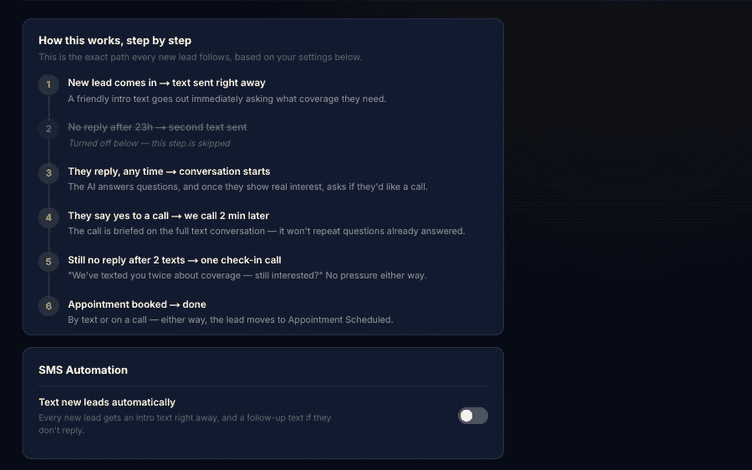
Agents that answer support and intake calls, or place scheduled outbound calls, on a script that adapts to what the caller actually says.
02
Real-time speech recognition & synthesis
Low-latency transcription and natural-sounding speech, tuned so the conversation feels continuous rather than turn-based.
03
Intent handling & NLU
Understanding what a caller wants even when they don't phrase it the way a menu expects, and routing accordingly.
04
Telephony & channel integration
Connecting to the phone numbers, SIP trunks and contact-centre software you already run, rather than replacing them.
05
CRM & system handoff
Every call writes back to the systems your team already works from, so there is no separate log to reconcile.
06
Multilingual conversation
Agents that operate in more than one language where the caller base needs it.
07
Call analytics & QA
Transcripts, outcomes and failure patterns surfaced so the agent's coverage can be measured and improved.
08
Compliance & recording governance
Consent, retention and access rules for call recordings and transcripts handled deliberately, not left to defaults.
OUTCOMES
What changes when this is done well.
Calls answered on the first ring
No queue for routine intake, support and scheduling calls.
Fewer dropped intake steps
A consistent script means the details a human agent sometimes forgets to ask are asked every time.
A record of every conversation
Transcripts and outcomes logged automatically, rather than depending on notes taken during the call.
Escalation that actually works
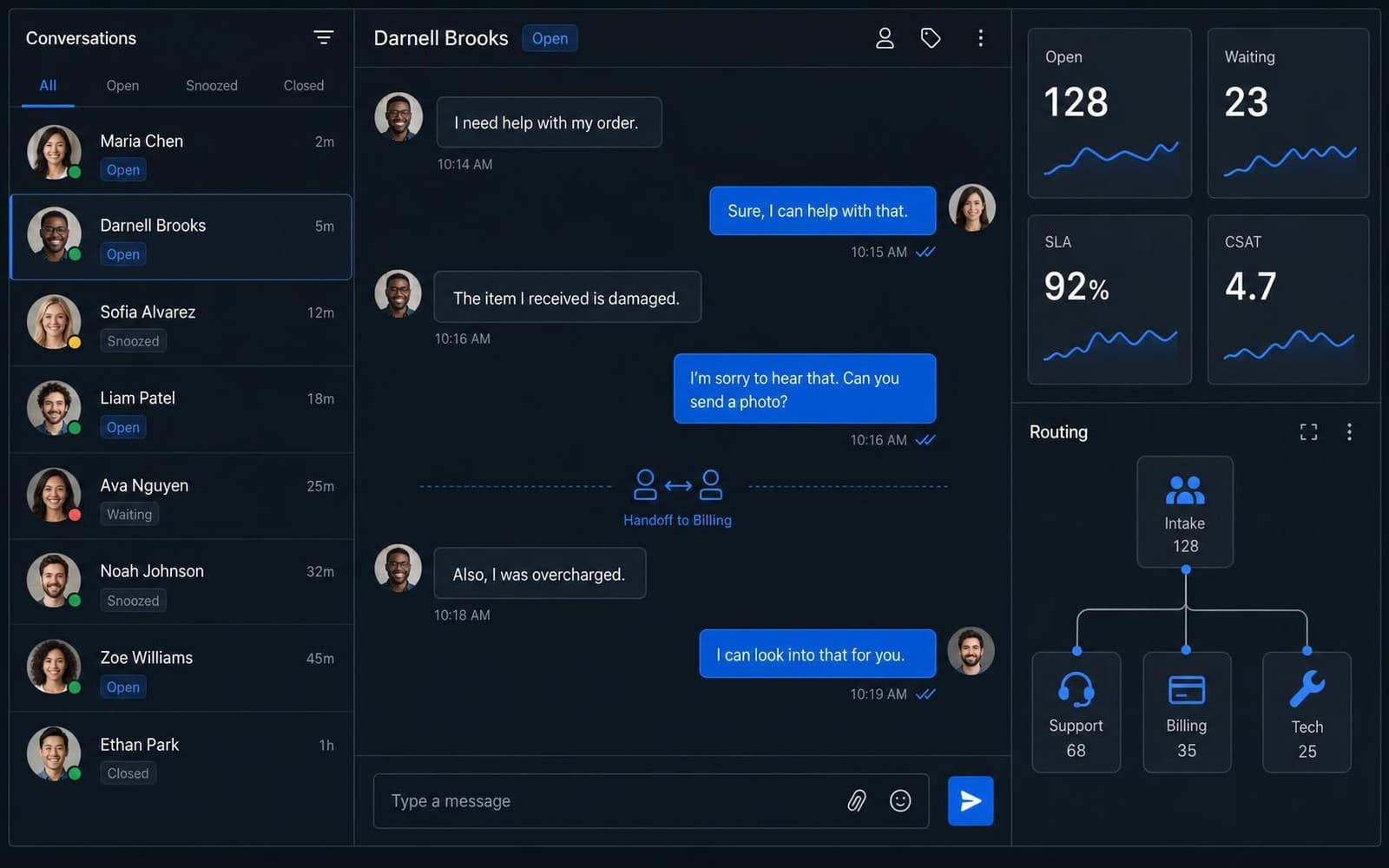
A defined handoff point to a person, with the context of the call carried over rather than lost.
TECHNOLOGY
The stack we work in.
Intelligence
Model, agent and vision tooling used to build the intelligence layer.
- OpenAI
- LangChain
- Python
- PyTorch
- TensorFlow
- TensorRT
- OpenCV
- Deepgram
- ElevenLabs
- Perplexity
Data
Pipelines, storage and reporting infrastructure underneath analytics and AI.
- PostgreSQL
- MySQL
- MongoDB
- Redis
- Firebase
- Power BI
- Plotly
- Seaborn
- Dash
- Scala
Cloud & DevOps
Infrastructure, automation and the path from commit to production.
- AWS
- Azure
- Google Cloud
- Docker
- Kubernetes
- Terraform
- Jenkins
- Git
- Bitbucket
SELECTED WORK
Where this has shipped.
RELEVANT INDUSTRIES
Where domain knowledge changes the answer.
FAQ
Common questions.
A phone tree routes on fixed menu choices; a chatbot works in text. A voice agent holds a spoken, open-ended conversation in real time, understanding intent, asking follow-up questions and handling interruptions the way a person on the call would.
Generally yes. Integration depends on what you run. Most SIP trunks, cloud telephony providers and contact-centre platforms expose the interfaces a voice agent needs to connect to existing numbers and call flows.
The agent recognises when a call is outside what it should handle and hands off to a person, carrying the transcript and any details already collected so the caller doesn't repeat themselves.
These are exactly the conditions a demo doesn't test for. Handling them well is a matter of model choice and tuning against real call audio, not a solved default. It is part of the engineering work, not an afterthought.
Recording, retention and access to transcripts are configured explicitly for each engagement rather than left at a platform default, so they match your own compliance requirements.
NEXT STEP
Tell us what you're building.
Bring us the problem with its real constraints attached. We will tell you what we would build, and what we would not.