Navigating the New Frontier: AI Agent Orchestration for Enterprise Systems
The realm of enterprise technology is rapidly advancing, propelled by the powerful force of Artificial Intelligence. As companies aim for enhanced efficiency and smarter decision-making, the complexity of their digital frameworks continues to expand. The integration and administration of several AI models and tools often culminate in isolated operations and lost opportunities. Businesses encountering this transformation find that AI development services are increasingly essential for remaining competitive, particularly when dealing with sophisticated systems.
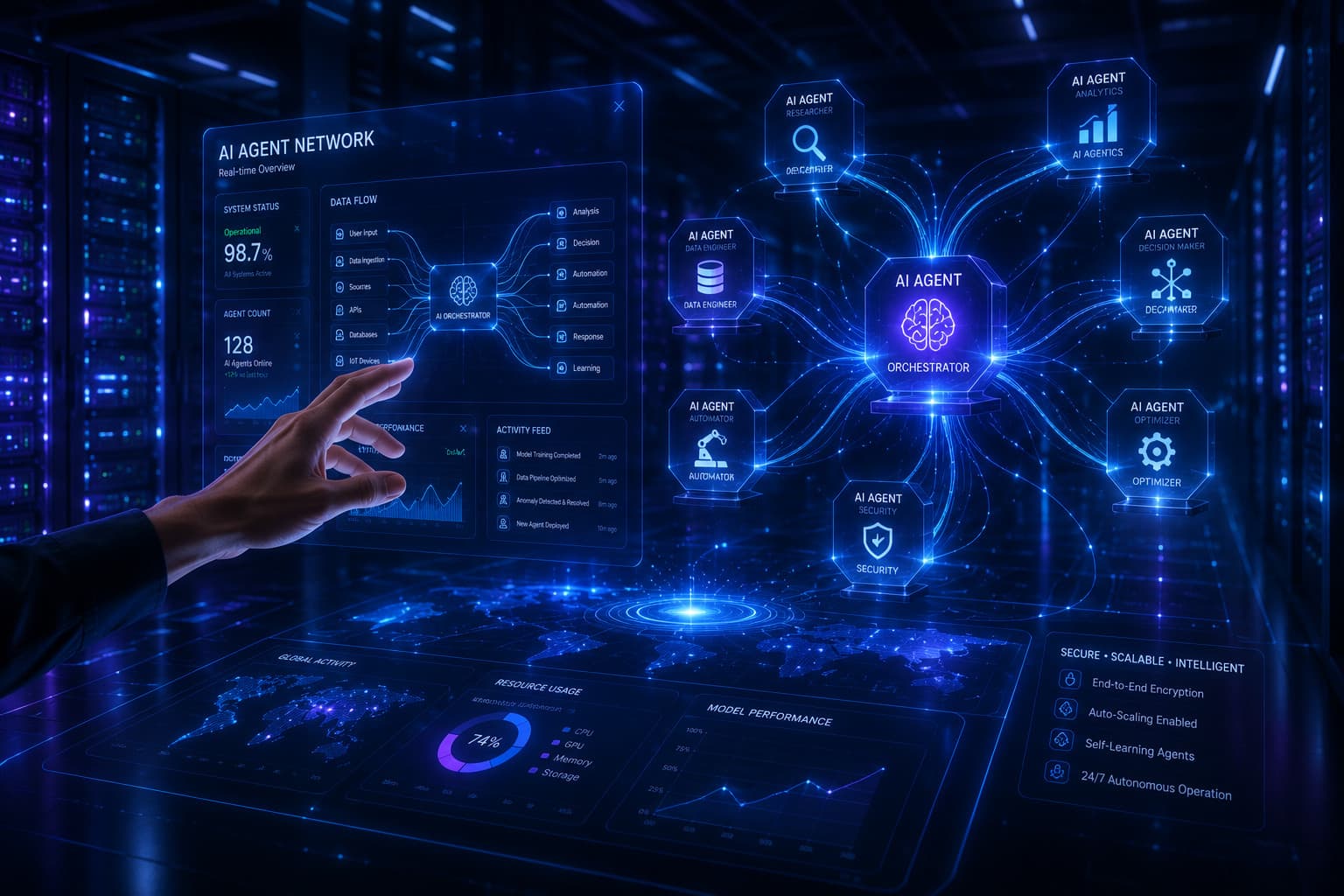
AI agent orchestration emerges as a sophisticated solution to coordinate intelligent agents collaboratively. Picture a symphony orchestra where each musician (AI agent) plays an instrument, yet a conductor (orchestration platform) orchestrates their performance to produce a cohesive and intentional melody. In the context of enterprise AI, this conductor facilitates seamless collaboration among various specialized AI agents to achieve intricate business objectives, surpassing the capabilities of individual agents. Developing and applying effective AI agent orchestration is transitioning from a strategic advantage to an indispensable necessity for capitalizing on AI's full potential within large organizations.
What Exactly is AI Agent Orchestration?
Essentially, AI agent orchestration involves aligning multiple specialized AI agents to carry out complex workflows. It encompasses the art and science of assigning tasks, managing shared contexts, and organizing execution to yield a unified, often intelligent result. Unlike traditional workflow management that typically prescribes rigid, pre-established steps, AI agent orchestration operates with autonomous, reasoning agents. These agents can assess situations, make choices, and learn from their engagements, facilitating a more dynamic approach to automation.
For example, in a customer service scenario, rather than relying on a single chatbot to address all queries, an orchestrated system might deploy multiple agents. One agent could focus on natural language understanding, another on navigating a knowledge base, a third on handling transaction requests, and a fourth on escalating complex issues to human support. The orchestration layer ensures efficient communication among these agents, enabling them to exchange information correctly and resolve customer issues collectively, often in real-time. While orchestration has traditionally been employed in IT to manage computing resources, AI agent orchestration applies these principles to intelligent entities capable of autonomous reasoning and action.
Orchestration Versus Basic Workflow Management
Understanding the difference between AI agent orchestration and basic workflow management is vital. Conventional workflows are often inflexible and deterministic: if X occurs, then Y happens. While suitable for repetitive, foreseeable processes, they falter when confronted with unpredictable inputs or tasks requiring subtle judgment. For instance, a simple workflow might process an invoice if all fields are filled accurately.
Conversely, AI agent orchestration excels in complex, non-deterministic settings. It equips agents to tackle scenarios that might not have been predetermined. If an invoice lacks necessary information, an intelligent agent might be orchestrated to proactively seek the missing data from various sources, identify inconsistencies, or initiate dialogue with the vendor for clarification. This process demands an understanding of context, adaptability to new data, and coordinated actions across multiple intelligent components. The agents possess autonomy, making decisions based on their expertise and the overarching system goals, with the orchestration layer offering strategic direction and managing resources.
Why Enterprise Systems Demand Intelligent Orchestration
Enterprises operate at a scale and intricacy that intensifies the challenges of integrating diverse systems and processes. Without a capable orchestration layer, deploying multiple AI capabilities can rapidly result in a complicated web of individual solutions, each necessitating separate management and struggling to communicate efficiently. Companies investing in enterprise software development recognize that effective AI integration requires a comprehensive plan, not merely isolated implementations.
Several key factors underscore the necessity for intelligent orchestration:
-
Complexity Management: Modern enterprise operations encompass numerous data sources, applications, and business protocols. AI agent orchestration offers a framework for managing this complexity, dissecting large issues into smaller, manageable tasks that specialized agents can tackle, ensuring harmonious collaboration.
-
Scalability: With the increasing adoption of AI, the number of agents and their interactions will rise exponentially. An orchestration platform maintains efficient scalability, allocating resources and managing agent loads to uphold performance, allowing businesses to expand AI capabilities without repeated restructuring.
-
Adaptability and Resilience: Business environments are ever-changing, and AI agent orchestration allows systems to adapt by rerouting tasks, introducing new agents, or modifying priorities. This enhances resilience, ensuring continuous operation even when components fail or new demands arise.
-
Consistency and Coherence: Without orchestration, AI models might yield conflicting results or pursue different objectives. The orchestration layer ensures unified operations, preserving context and ensuring all agents contribute to a consistent outcome in line with business goals, crucial for data integrity and trust in AI results.
-
Operational Efficiency: Automating the synchronization of intelligent agents drastically reduces manual supervision and human intervention, leading to faster execution, fewer errors, and substantial improvements in operational efficiency across departments like supply chain management and financial analysis.
The shift from basic automation to intelligent automation through AI agent orchestration signifies a major advancement, enabling enterprises to address problems previously unmanageable by traditional software. For broader insights into software agents, explore resources like Wikipedia's page on Software Agents.
Recognized Patterns in Multi-Agent Orchestration
To effectively handle the complexity of multi-agent systems, several established patterns for AI agent orchestration have been developed, each offering distinct advantages and trade-offs in terms of control, resilience, and scalability. Often, enterprise systems will integrate components from multiple patterns within the same agent ecosystem to suit specific requirements.
-
Centralized Orchestration: In this model, a single, authoritative orchestrator governs tasks, oversees communication, and monitors agent activity. It offers high-level control and simplified troubleshooting, as all logic is centralized. However, it can become a constraint and singe source of failure, limiting scalability and resilience, suitable for smaller, closely-knit agent systems with predictable workflows.
-
Distributed or Decentralized Orchestration: Control is shared among agents, or there's no central authority. Agents may coordinate directly or through a peer-to-peer network. This model boosts resilience (no central point of failure) and scalability, as agents work autonomously. The downside is a complexity surge in managing communication and ensuring coherence, ideal for extensive, dynamic environments where agents need high autonomy.
-
Hierarchical Orchestration: This pattern features layers of orchestration, with a high-level coordinator supervising sub-coordinators, each responsible for specific agents or tasks. It provides a balance between control and distribution, enabling modularity and scalability while maintaining oversight. Particularly beneficial for complex systems that can be naturally divided into sub-domains.
-
Hybrid Orchestration: As the name implies, this approach merges elements from centralized, distributed, or hierarchical models. For example, key agents might be centrally managed for tight control, while others operate in a distributed mode. This offers flexibility for tailoring orchestration strategies to different parts of an enterprise system, optimizing performance or resilience needs.
-
Federated Orchestration: Suitable for scenarios where multiple independent agent systems collaborate without merging control. Each system maintains its orchestration, but a federation layer facilitates secure, standardized information exchange between them, common in multi-partner ecosystems or integrating departmental AI solutions.
-
Emergent Orchestration: This experimental pattern allows agent behavior and coordination to develop naturally from interactions rather than preset rules, relying on agents discovering collaboration methods through learning. While offering extreme flexibility, it remains exploratory for enterprise systems due to unpredictability and consistency challenges, better suited for research environments.
The choice of an appropriate pattern—or combination—depends heavily on use case specifics, security demands, and the desired balance between control, adaptability, and performance. Many enterprises utilize custom application development to tailor orchestration platforms that fit their distinctive operational frameworks.
Implementing AI Agent Orchestration in the Enterprise
Implementing AI agent orchestration in an enterprise is a nuanced project requiring more than just deploying agents. It demands meticulous planning, strategic platform selection, and strong operational frameworks. Here are crucial considerations for organizations aiming to employ multi-agent systems:
-
Defining Clear Objectives: Prior to engaging with technology, articulate the business challenges AI agents will address. Which complex workflows are automated? What tangible results are anticipated? Clear objectives steer the design and implementation, ensuring the orchestration fulfills an actual purpose.
-
Platform Selection and Evaluation: Choosing the right orchestration platform is pivotal. Enterprises should assess platforms based on their ability to handle various agent types, support orchestration patterns, provide monitoring and logging, and integrate with existing systems, considering scalability, security, ease of use, developer support, and cost.
-
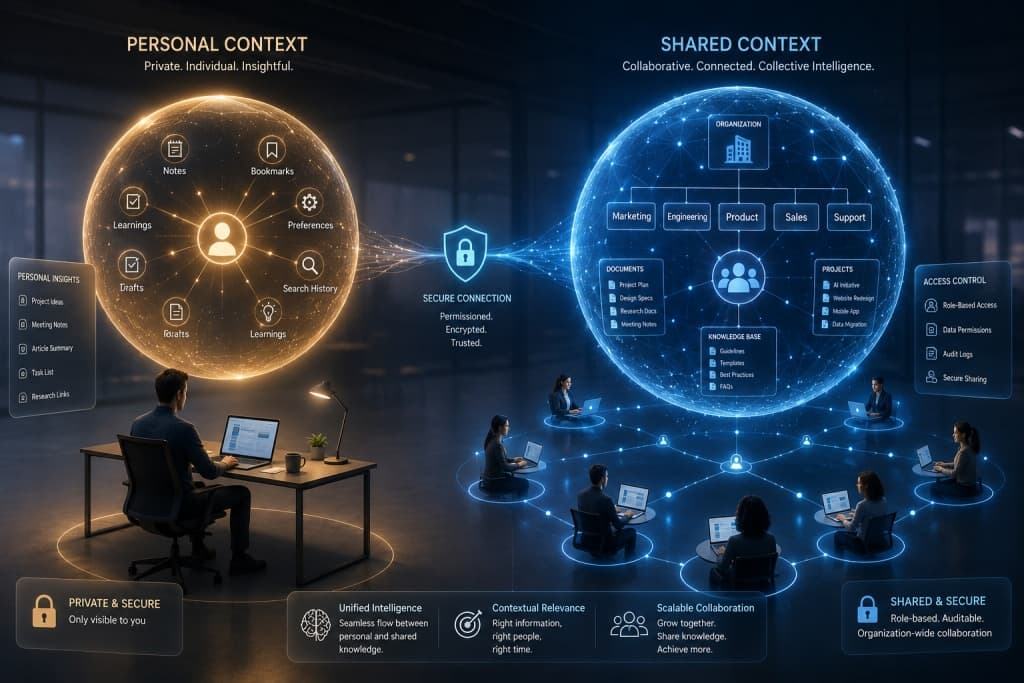
Data Management and Context Sharing: Effective agent orchestration relies on agents accessing relevant data. Establish secure mechanisms for context and data sharing without compromising security or consistency, involving centralized repositories, streaming architectures, and APIs.
-
Security and Governance: Orchestrated AI systems present new security challenges. Implement robust protocols for agent communication and data access, such as authentication and encryption. Establish governance policies on agent behavior, data use, and accountability to maintain compliance and trust. Resources like the NIST Artificial Intelligence guidelines offer best practices in AI security.
-
Monitoring and Observability: Understanding agent performance and detecting anomalies is crucial for healthy systems. Implement comprehensive monitoring, logging, and alerting systems for real-time insights into interactions and system health. Organizations often leverage DevOps managed services to maintain consistency and reliability.
-
Integration with Existing Systems: AI orchestration platforms must integrate with established applications, databases, and systems, necessitating custom connectors, utilizing APIs, and ensuring data compatibility. Seamless integration minimizes disruption and maximizes AI benefits.
-
Ethical AI Considerations: As AI agents gain autonomy, ethical considerations become important. Establish guidelines for fairness, transparency, accountability, and privacy. The orchestration layer can enforce ethical boundaries by monitoring agent decisions for bias or unintended effects.
The Future of Intelligent Automation with AI Agents
AI agent orchestration is advancing toward more sophisticated and autonomous systems, with future platforms providing more intuitive designs, deployment, and management of multi-agent architectures, making advanced AI capabilities widely accessible. The focus will be on self-optimizing orchestration layers dynamically reconfiguring agent strategies based on feedback and business needs.
As AI agents improve in reasoning and interaction, their orchestration will be key in developing intelligent automation that manages business processes entirely. This progression may blur lines between orchestration patterns, with systems adapting approaches for tasks depending on suitability. Attention will stay on security, explainability, and ethical conduct as these systems take on pivotal roles. Sophisticated Data Analytics tools will be instrumental in providing insights for informed agent decisions.
AI agent orchestration is fast becoming the backbone of innovative enterprise AI, allowing intelligent agents to work harmoniously, unlocking new automation and problem-solving abilities for businesses globally. As organizations experiment and deploy these systems, they'll find themselves better equipped to tackle challenges, foster innovation, and retain a competitive edge in a more intelligent future.